What is a Growth PM, anyway?
How Growth PMs are different from core PMs, the cornerstone skill set, and examples from LinkedIn, Facebook, Amplitude, and Lyft.

I’ve been asked a lot recently:
“Thomas, you’re a Growth Product Manager. Sounds exciting. What do you actually do?”
And to be honest, I often give different answers.
After sharing examples of stuff I’ve worked on, I eventually circle back and say that it’s kind of like a cross-functional special ops unit that you can throw at most problems or business KPIs.
But I’m not really satisfied with that explanation. It feels incomplete and vague, and I’m not sure it’s helpful to anyone.
So I’ve been thinking lately: what does a Growth PM look like at other companies? How is it different from core PM work? And how is it different in smaller and larger companies?
Through On Deck, I’ve been fortunate to meet some Growth PMs with a lot more experience than me, so I decided to crowdsource the answers to these questions.
This Note is, therefore, a bit different in that it’s mainly a synthesis of conversations I’ve had with:
- Andrew Yu, former Growth PM at LinkedIn, Director of the ODPM fellowship
- Derrick Ko, former Growth PM at Lyft, founder of Spin
- Andrea Wang, Senior Growth PM at Amplitude
- Michael Angelico, former Growth PM at Facebook
So hang tight, and let’s figure out what the hell a Growth PM is.
The rise of product-led growth
Let’s start with a bit of growth history.
In 2007 Dave McClure from 500 startups introduced a metrics framework for thinking about growing a product. He called it AARRR, which stands for Acquisition, Activation, Retention, Referral, & Revenue. Famously known as the “pirate metrics”.
Say it out loud: “AARRR”.
Pirate metrics. Get it?
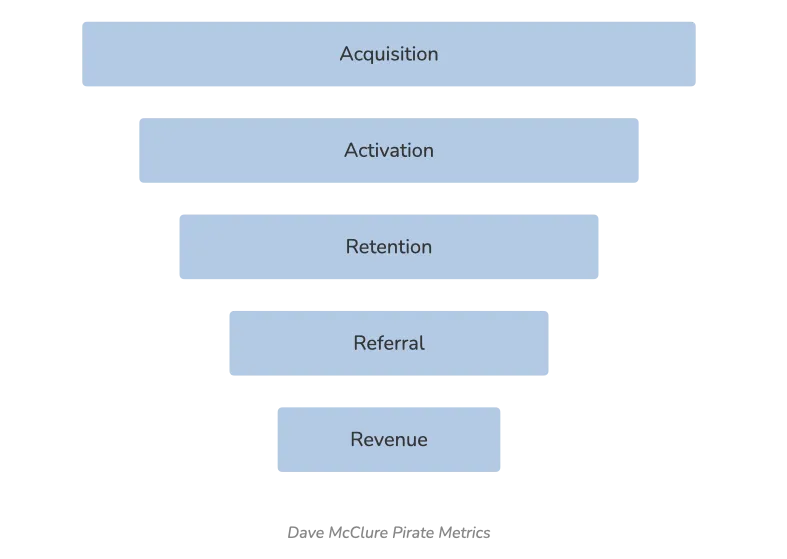
Since then, most growth teams have focused on optimizing the metrics in this funnel. They’ve built teams around each pillar and used it as the frame of reference for talking and strategizing around growth.
“What’s the top of funnel growth like?”; “What’s the activation rate like?”; “How’s the revenue conversion rate?”; “What’s the referral rate?”
Three big influences on my thinking on this topic have been Sean Ellis’s book on Hacking Growth, Lean Analytics, and Andrew Chen’s seminal piece on building and organizing growth teams that can execute against these metrics.
In the last decade, however, these growth teams, especially in SaaS companies, seem to have found their way into the product teams, and we’ve started seeing new roles pop up like:
- Product Manager, Growth
- Product Growth, Monetization
- Growth PM
- Growth PM, Activation
It seems to be fueled by the realization that the success of the product is now the primary driver of growth for a company, where:
- New user acquisition is driven by existing users that have experienced the product and tell others about it.
- The new standard for activation is freemium and free trials of the product.
- And customers buy as a result of trying the product rather than being promised value by a salesperson.
Or in jargon, where growth is product-led, rather than sales-led or marketing-led.
But what does a growth person in a product team actually work on to drive growth with the product? And how are their skills different from those of core PMs?
The work of a Growth PM
One of my favorite examples of product-led growth work can be found on Loom’s video pages.
This graphic from Reforge shows the mechanics of Loom’s viral loop, and as we can imagine, a core part of this loop is the conversion rate from a viewer to a new user (step 5 → 1).
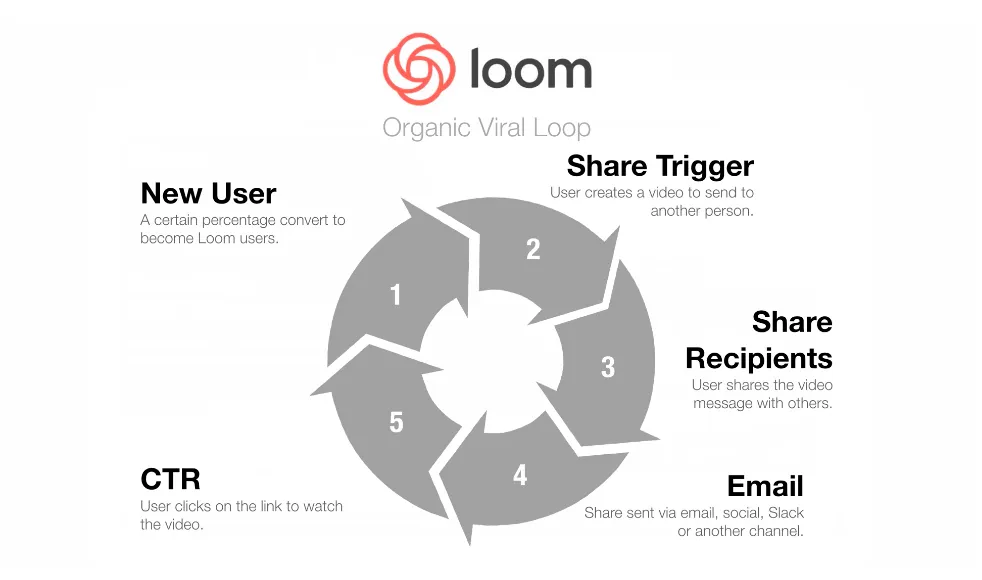
It begs the question: what has Loom done to optimize for viewers to become new users?
Well, with an incognito window, we can open a recording and examine how they’ve designed the experience differently for users and non-users (viewers).
First, here’s the experience for me, a user, after making a recording.
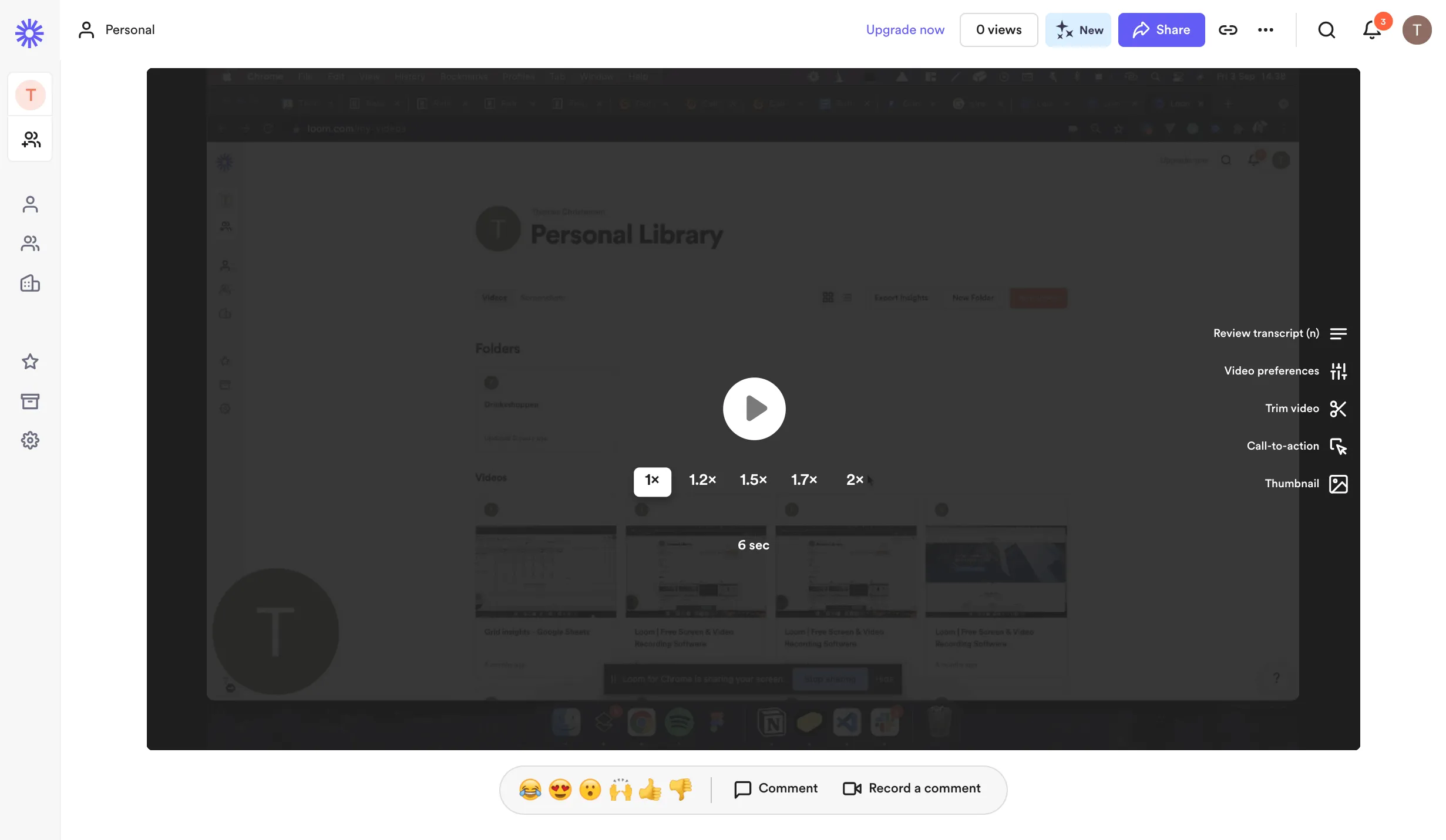
And here’s the same video opened up in an incognito window, simulating a viewer.
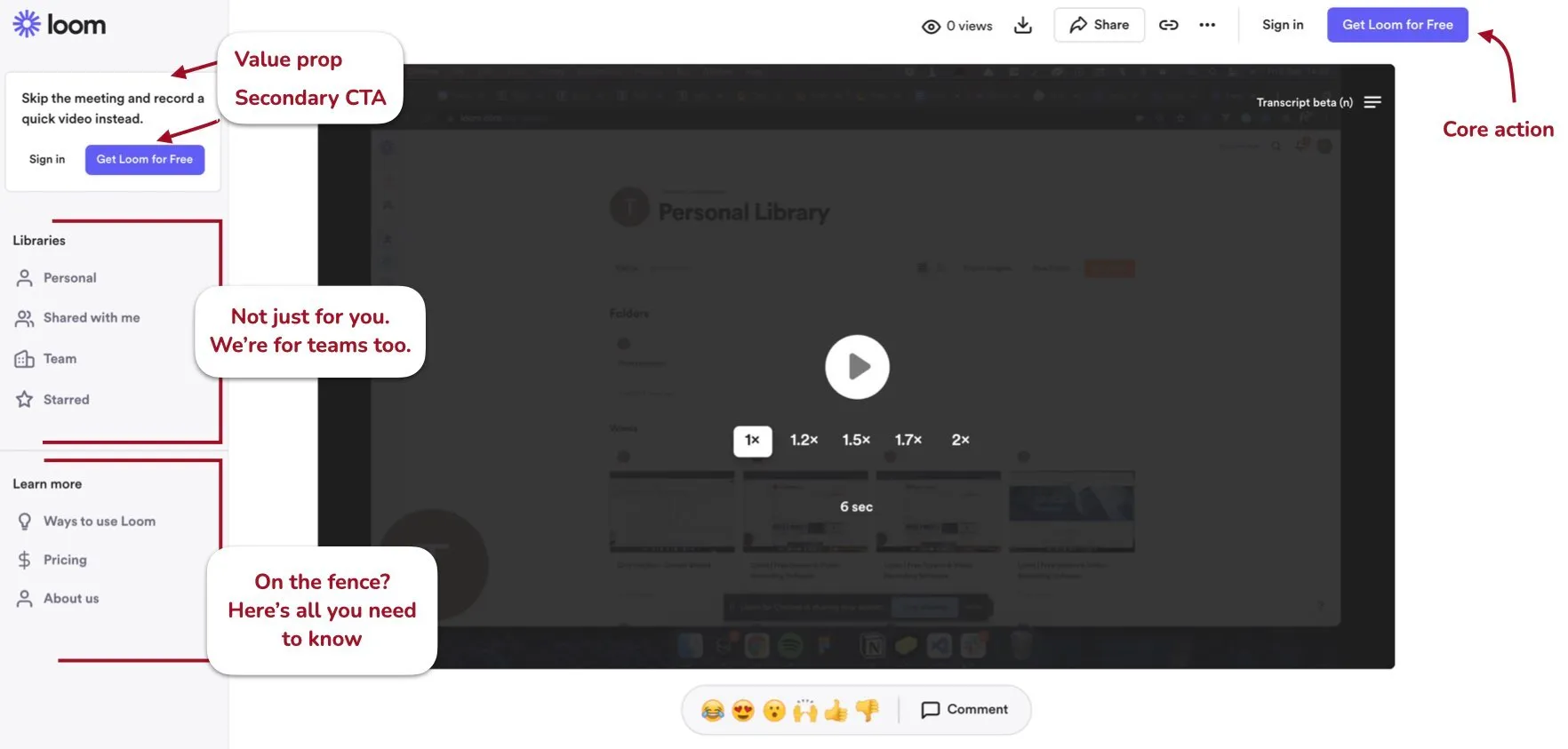
Boy, there’s a lot here we could dive into.
I especially pick up on the main CTA in the top-right that has changed from Share to Get Loom for Free and the expanded left-side navigation.
The main CTA change makes sense, but the left-side navigation is a noteworthy design decision.
Seeing Team and Personal folders communicates a lot about the platform, and it’s a nice way to give a viewer a feeling of what it’s actually like to be a user.
Everything about this experience is built to drive sign-ups, and here we have a good example of a way to use the product to drive a core business KPI: the rate at which viewers become new users.
So with that context, let’s now look at some more examples.
First up is Andrew. He worked on the network team at Linkedin, and his business metric was to help members discover more opportunities.

It’s a fairly high-level metric, it’s hard to measure, and there are clearly many ways to go about it.
A more traditional growth manager might launch a content series with education and webinars about why strong networks are important, but Andrew looked at it through the lens of how they could use the product to drive impact instead.
With his team, he launched a button on the main feed that directed users to a page full of recommendations for pages to follow and people to connect with.
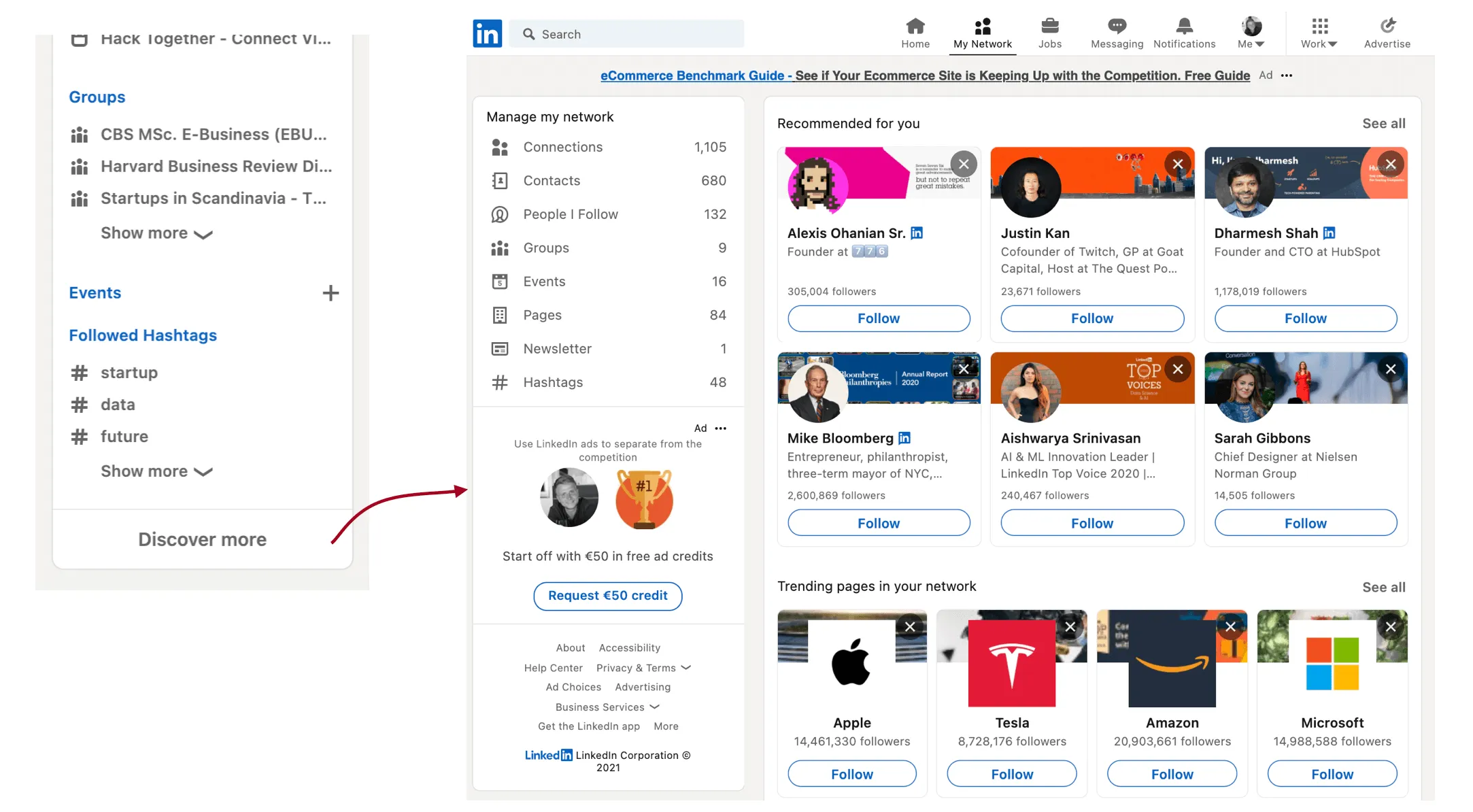
This must have been really fascinating to experiment with, considering the reach of a button on everyone’s LinkedIn news feed!
Andrew actually did an entire presentation on this and growth product management, and it’s been a big inspiration for this post so I’d encourage you to check out the recording of it.
Michael worked on a bit of a different case at Facebook.

His focus was to grow the company’s stickiest advertising revenue — the spend from multi-billion dollar companies that integrate with Facebook’s Marketing API to build third-party applications on top.
In contrast to a traditional PM, who might own the feature set for the API itself, Michael was focused on growing the usage, and ultimately dollars spent, on the API.
He executed on a dollars spent north star metric and launched a loyalty product where the highest paying, most loyal spenders got access to enhanced data analytics, beta releases, product roadmap inputs, and other features.
I like how we can clearly see the product lens that Michael looked through. In a heavy B2B enterprise case like this, account managers might be thrown at the problem — which Michael pointed out that they also did — but as a Growth PM, Michael was building out features and using the product to move the growth needle.
Alright. Next up is something I think is a more common metric for Growth PMs to work on: new user activation.
Derrick and Andrea have both worked on this.
The difference is that, at the time, Derrick was at Lyft, mostly working with consumers, and Andrea is currently at Amplitude, where she was trying to activate businesses with multiple people involved in the setup and buying decision.
So let’s look at how they went about it.

Derrick’s ultimate metric at Lyft was to increase revenue. He attacked new user activation by first properly instrumenting each step in the onboarding to get a clear overview of the activation funnel, from signing up to completing a ride.
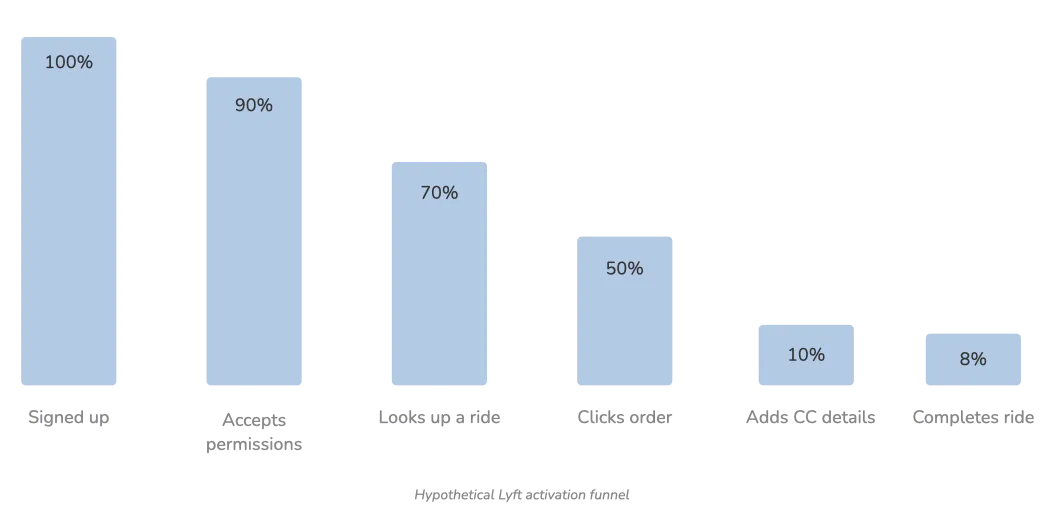
With a clear overview of the activation funnel, they could pinpoint the key drop-off points and start running experiments against them. In the end, Derrick and his team saw a 50% improvement in the number of users that went from signup to hailing a ride!
Stop for a second.
Let’s imagine the impact of a 50% increase in users completing a ride on a product like Lyft. Even better, it’s a product iteration that will continue to drive that impact with no continuous effort.
Yes, mind-blowing!
Andrea attacked this from a different angle.

She knew that getting the first user to collaborate with other stakeholders in the product team was crucial for an analytics product like Amplitude. She saw self-service activation as a big bottleneck to unlock Amplitude’s growth.
I think that makes a lot of sense. Getting event data flowing into a new product analytics tool is a painful task for engineering, and learning a new analytics tool is a huge deal for the product and business team. We’re gonna need more than drop-off point experiments here.
The interesting thing about self-serve activation is that a marketeer might try and impact this metric very differently than a product person. They might work on documentation, launch a webinar series to educate users, or set up email and push notifications to re-activate.
But Andrea went about it differently, and as we see again, with the lens of using the product to drive the impact, she worked with engineering and design to completely redesign the signup flow.
The goal was to reduce UX confusion and provide technical and non-technical users with clear next steps for the first user to collaborate with their team, get Amplitude set up, and get data flowing in.
Her experiment saw a step-function improvement to signup conversion and got users to value faster.
Boom!
Okay, it’s starting to make sense.
From what we’ve seen, Growth PMs are pretty similar to core product managers. But, they usually work cross-functionally, are more experiment-driven, and — here’s the nugget — rather than owning a product or feature, they focus on improving a specific metric or business KPI.
You could imagine an org structure along these lines. And in bigger companies, consequently, a growth product team for each AARRR pillar.
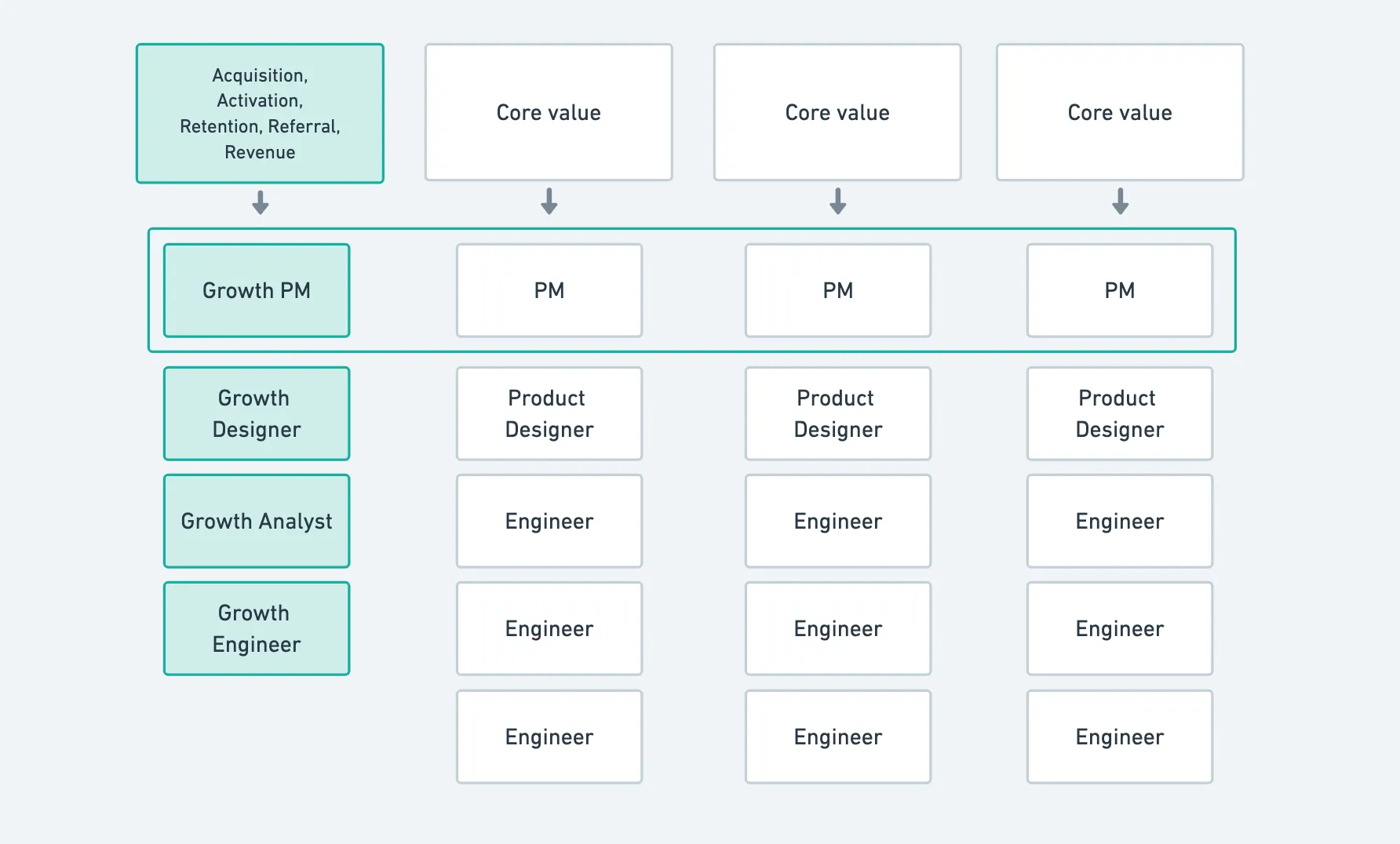
But what does it take to sit cross-functionally and execute on work like this? What are the skills and attributes that a Growth PM needs to have? Could a core PM not pull it off?
The skills of a Growth PM
The main thing I found consensus around was that good product sense — as defined by Shreyas Doshi — is the table stake for a good Growth PM.
However, what stood out as the cornerstone skills of the best-in-class Growth PMs were experimental sense and the ability to rally teams cross-functionally.
Let’s explore both of them.
Experimental sense
Derrick has been a growth PM, managed Growth PMs, and hired them, so I was dying to ask him what skills or attributes he’d look for when hiring.
I loved his answer.
I’d look for how they’d approach experiments. That pretty much tells you the rest.
His logic is that if someone can paint the end-to-end picture of how they’d run an A/B test or roll out a feature flag release, analyze the results, validate or invalidate their assumptions, and make a decision, then you can unpack their product sense, their strategy for rallying teams, and their analytical sense — the core components of what it takes to run good product experiments.
I’m definitely stealing that interview tip!
So, experimental sense: the ability to strategize, organize and execute product experiments.
Ability to rally teams
Andrea from Amplitude made this sink in nicely:
I look for EQ to make sure they can work cross-functionally. Growth has lots of dependencies with other product and GTM teams, so the ability to inspire and rally other teams is super important.
I can definitely relate to this. Especially in small companies, you might be ‘lending’ resources from core product teams, and the ability to communicate, inspire, and get buy-in is simply a table stake.
Similarly, Michael explained that, at Facebook, his team was not situated within the core product team. They were both building on the API, but they didn’t directly interface.
You can imagine the challenges that might create for a role that depends on other teams, and that’s why this skill feels so fundamental. It clearly requires both hard and soft skills to be trustworthy with other teams and rally them effectively. Hard skills like design, analytical, technical, user experience competence, and soft skills like empathy and communication.
Okay Thomas, so what is a Growth PM?
Well, when I started researching this, I found this phrasing in The rise of the growth product manager that I liked:
Growth product managers are peers to traditional (or core) product managers. But rather than owning a specific product, the growth PM is focused on improving a specific business metric or commercial goal.
I think it describes the essence of a Growth PM role well, but it seems to me that Growth PMs are also different from a core PM in their methods; they are more experiment-led, over-index of quantitative data, and usually with a shorter-term focus.
But so do Growth managers. The key difference here is the lens through which they look at metrics optimization. Growth PMs start with the product and asks, “how can we use the product to improve this metric?”
So, there we have it. That’s what the hell a Growth PM is.
A note on metrics
At the end of this, I found myself wondering: what are the implications of this relentless quantitative focus on metrics? What are the tradeoffs? What are the downsides?
Yes, you can show a pop-up to the entire user base and force them to do something you want. But the brand might take a hit, and they might lose faith in the product, which might impact trial conversions, which might impact that referral loop you’ve got, and ultimately revenue.
Andrew pointed out that an essential trait is something he calls “being an Ecosystem thinker”, which — and he might slaughter me for this interpretation — is like the ability to view the product, its mechanics, the stakeholders, and all its levers holistically so that when you make a change, you have at least a hunch about what it will impact.
It’s easy to get caught up optimizing metrics in a vacuum, but just like in life, there’s a principle here that when we pick up one end of the stick, we pick up the other end.
As Andrew and I finish off our discussion on this topic, he goes: “You live by metrics, you die by metrics”.